


Did you know that 80% of dogs over three years of age already suffer from some form of periodontal disease? This data comes from the American Veterinary Dental Society. For small breeds, the risk is even higher.
Let's explore why soft food isn't enough and how dental chews can save your pet from anesthesia and tooth extractions.
Let's explore why soft food isn't enough and how dental chews can save your pet from anesthesia and tooth extractions.
Why Are Our Pets' Teeth at Risk? Scientific Evidence
1. Soft Food vs. Nature
In the wild, dogs gnawed on bones and sinew, naturally cleaning their teeth. Today, they eat processed food — the perfect breeding ground for plaque. Research shows that chewing fibrous treats mechanically removes dental plaque and massages the gums.
2. Small Breeds Are High-Risk
Yorkies, Chihuahuas, Pomeranians, and Toy Poodles have tightly packed teeth where food gets stuck easily, and bacterial film forms faster. That's why small dogs experience gum disease significantly more often.
3. Longer Lifespan = More Problems
In the past, dogs rarely lived long enough to develop chronic dental issues. Now, our beloved companions live longer, and by age 7–8, their oral health often needs serious attention.
4. The Oral-Gut Connection
Oral bacteria can enter the bloodstream and affect internal organs — the heart, liver, and kidneys. Additionally, 50–60% of domestic dogs suffer from intestinal microbiome imbalances (dysbiosis). Oral and digestive health are deeply connected.
In the wild, dogs gnawed on bones and sinew, naturally cleaning their teeth. Today, they eat processed food — the perfect breeding ground for plaque. Research shows that chewing fibrous treats mechanically removes dental plaque and massages the gums.
2. Small Breeds Are High-Risk
Yorkies, Chihuahuas, Pomeranians, and Toy Poodles have tightly packed teeth where food gets stuck easily, and bacterial film forms faster. That's why small dogs experience gum disease significantly more often.
3. Longer Lifespan = More Problems
In the past, dogs rarely lived long enough to develop chronic dental issues. Now, our beloved companions live longer, and by age 7–8, their oral health often needs serious attention.
4. The Oral-Gut Connection
Oral bacteria can enter the bloodstream and affect internal organs — the heart, liver, and kidneys. Additionally, 50–60% of domestic dogs suffer from intestinal microbiome imbalances (dysbiosis). Oral and digestive health are deeply connected.
What Research Says About Dental Chews
A study conducted at Rutgers University (USA) revealed impressive results
No statistically significant difference was found between treatments (p=0.330). In this study, beef root performed comparably to brushing with toothpaste.
Chewing natural treats reduces oral bacteria by 60–80%. The mechanism involves mechanical plaque removal and stimulation of saliva production, which has bactericidal properties.
How the Dental Stick Works — Scientifically Speaking

Mechanical Cleaning
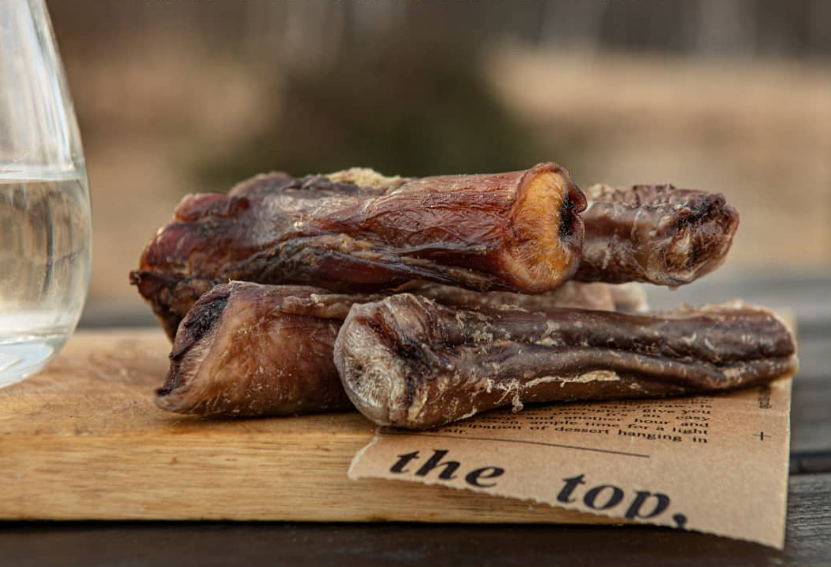
Beef root has an ultra-dense, fibrous structure. While your dog chews, the rough fibers act like a toothbrush and dental floss. Research confirms that chewing activity is the key factor in reducing dental plaque.
Microbiome Support
Mono-protein (100% beef) is an easily digestible protein source that supports digestive comfort. Prolonged chewing stimulates saliva production, helping supports natural oral balance.
Simple & Single-Ingredient
The Dental Stick contains 100% beef root — no grains, no artificial additives, no flavor enhancers. A single-protein recipe is easier to manage for dogs with sensitivities, though dogs allergic to beef should avoid it.
Beef root has an ultra-dense, fibrous structure. While your dog chews, the rough fibers act like a toothbrush and dental floss. Research confirms that chewing activity is the key factor in reducing dental plaque.
Microbiome Support
Mono-protein (100% beef) is an easily digestible protein source that supports digestive comfort. Prolonged chewing stimulates saliva production, helping supports natural oral balance.
Simple & Single-Ingredient
The Dental Stick contains 100% beef root — no grains, no artificial additives, no flavor enhancers. A single-protein recipe is easier to manage for dogs with sensitivities, though dogs allergic to beef should avoid it.
Why Prevention Matters
According to the American Veterinary Dental College, periodontitis is an infectious disease that affects the tissues supporting the teeth. If left untreated, the infection can spread through the bloodstream to the heart, liver, and kidneys.
The Four Stages of Periodontal Disease:
Stages 2–4 are IRREVERSIBLE. This is why prevention is so critical.
Who Needs the Dental Stick Most?
- Small breeds (Yorkies, Chihuahuas, Pomeranians, Toy Poodles) — to prevent tartar buildup in crowded teeth
- Dogs that refuse a toothbrush — let nature do the work
- Any healthy dog — for stress relief, entertainment, and oral hygiene maintenance
Important Safety Note
Always supervise your dog when feeding any chew. Ensure the stick is slightly larger than the dog's mouth. Beef root softens with saliva and breaks down into safe fibers, but basic precautions are still necessary.
Try the Beef Root Dental Stick. Science says "yes," and your dog will thank you with cleaner teeth and fresher breath!

