


You've probably heard that omega-3s are great for your dog's coat or your cat's joints. But here's what most pet owners don't realize: omega-3 isn't a single ingredient.
It's a whole family of fatty acids, and they work very differently inside your pet's body.
It's a whole family of fatty acids, and they work very differently inside your pet's body.
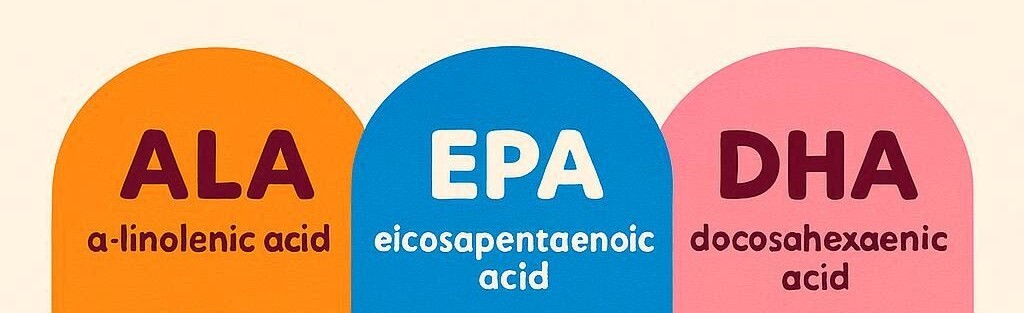
Meet the Three Key Players
The Problem with ALA
ALA is found in many plant sources. But here's the catch: your pet's body can barely use ALA directly.
To get any benefit, ALA must be converted into EPA and DHA. And this conversion is extremely inefficient:
This means that relying on ALA alone won't deliver the real health benefits your pet needs.
To get any benefit, ALA must be converted into EPA and DHA. And this conversion is extremely inefficient:
- In dogs — weak and unreliable
- In cats — almost nonexistent
This means that relying on ALA alone won't deliver the real health benefits your pet needs.
EPA and DHA: The Active Forms That Actually Work
EPA and DHA are the forms of omega-3 that:
These are the forms used in veterinary medicine, clinical studies, and therapeutic doses.
- Require no conversion
- Get immediately incorporated into cell membranes
- Start working right away
These are the forms used in veterinary medicine, clinical studies, and therapeutic doses.
EPA — The Inflammation Regulator
Think of EPA as your pet's internal firefighter. It helps control inflammation throughout the body.
EPA is especially important for:
EPA helps to:
EPA is especially important for:
- Allergies and itchy skin
- Dermatitis and redness
- Joint pain and stiffness (arthritis)
- High triglycerides and heart health
- Chronic inflammation
EPA helps to:
- Reduce swelling and itching
- Decrease pain
- Support healthy blood vessels
EPA is the brake pedal for inflammation.
DHA — The Nervous System Architect
DHA plays a completely different role. It's the structural building block for the brain and nerves.
DHA is critical for:
DHA is especially valuable for:
DHA is critical for:
- Brain development in puppies and kittens
- Retinal (eye) health
- Learning ability and behavior
- Stress resilience
DHA is especially valuable for:
- Growing puppies and kittens
- Senior pets with cognitive decline
- Anxious or stressed animals
- Working and performance dogs
DHA builds a smarter, sharper, and calmer pet.
Why You Need Both EPA and DHA
Here's a critical fact that many supplement labels hide:
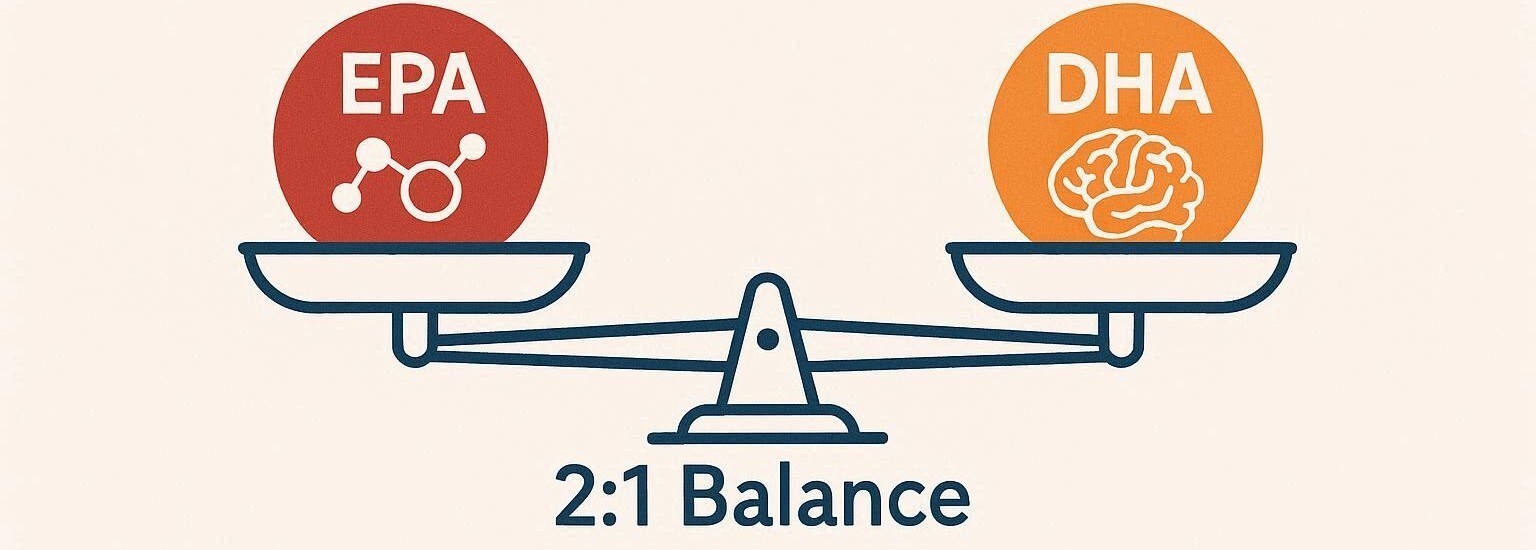
The body cannot efficiently convert EPA into DHA — or DHA into EPA.
- If you give only DHA → inflammation may persist. Your pet's joints and skin won't get relief.
- If you give only EPA → the brain and nervous system miss their building material. Learning, memory, and vision may suffer.
You need both forms, together, in the right balance.
The Practical Balance of EPA and DHA
Depending on your pet's needs, the optimal ratio changes:
Quick Takeaways
- Not all omega-3s are equal. ALA is not the same as EPA and DHA.
- EPA fights inflammation — great for allergies, arthritis, and skin issues.
- DHA builds the brain — essential for puppies, kittens, and seniors.
- Never give just one form. Your pet needs both EPA and DHA.
- Balance matters. Adjust the ratio based on your pet's specific health needs.
When choosing an omega-3 supplement for your dog or cat, don't just look for "contains omega-3." Look for the actual amounts of EPA and DHA in milligrams. These are the ingredients that do the real work — from soothing itchy paws to keeping an old mind sharp.
Now you know what omega-3 really is. And more importantly — what it really does.
Now you know what omega-3 really is. And more importantly — what it really does.

