


When it comes to the health of our pets, we want to give them the best. Salmon is one of the most valuable sources of omega-3 and protein for cats and dogs. However, not all salmon offers the same nutritional value.
Let's explore the difference between wild Norwegian salmon and farmed salmon, based on data from reputable international organizations — the Food and Agriculture Organization of the United Nations (FAO), the World Health Organization (WHO), and the European Food Safety Authority (EFSA).
Let's explore the difference between wild Norwegian salmon and farmed salmon, based on data from reputable international organizations — the Food and Agriculture Organization of the United Nations (FAO), the World Health Organization (WHO), and the European Food Safety Authority (EFSA).
What is Farmed Salmon?
Farmed (aquaculture) salmon is fish raised in artificial conditions: in net pens, tanks, or special enclosures. The main goal of such production is to grow fish quickly and at minimal cost.
On farms, fish are typically fed processed pellet feed, and antibiotics are used to prevent diseases.
Main regions for farmed salmon: Norway, Chile, Scotland.
On farms, fish are typically fed processed pellet feed, and antibiotics are used to prevent diseases.
Main regions for farmed salmon: Norway, Chile, Scotland.
Important: The vast majority of Atlantic salmon and trout on store shelves is farmed. Wild salmon is rarer and more expensive.
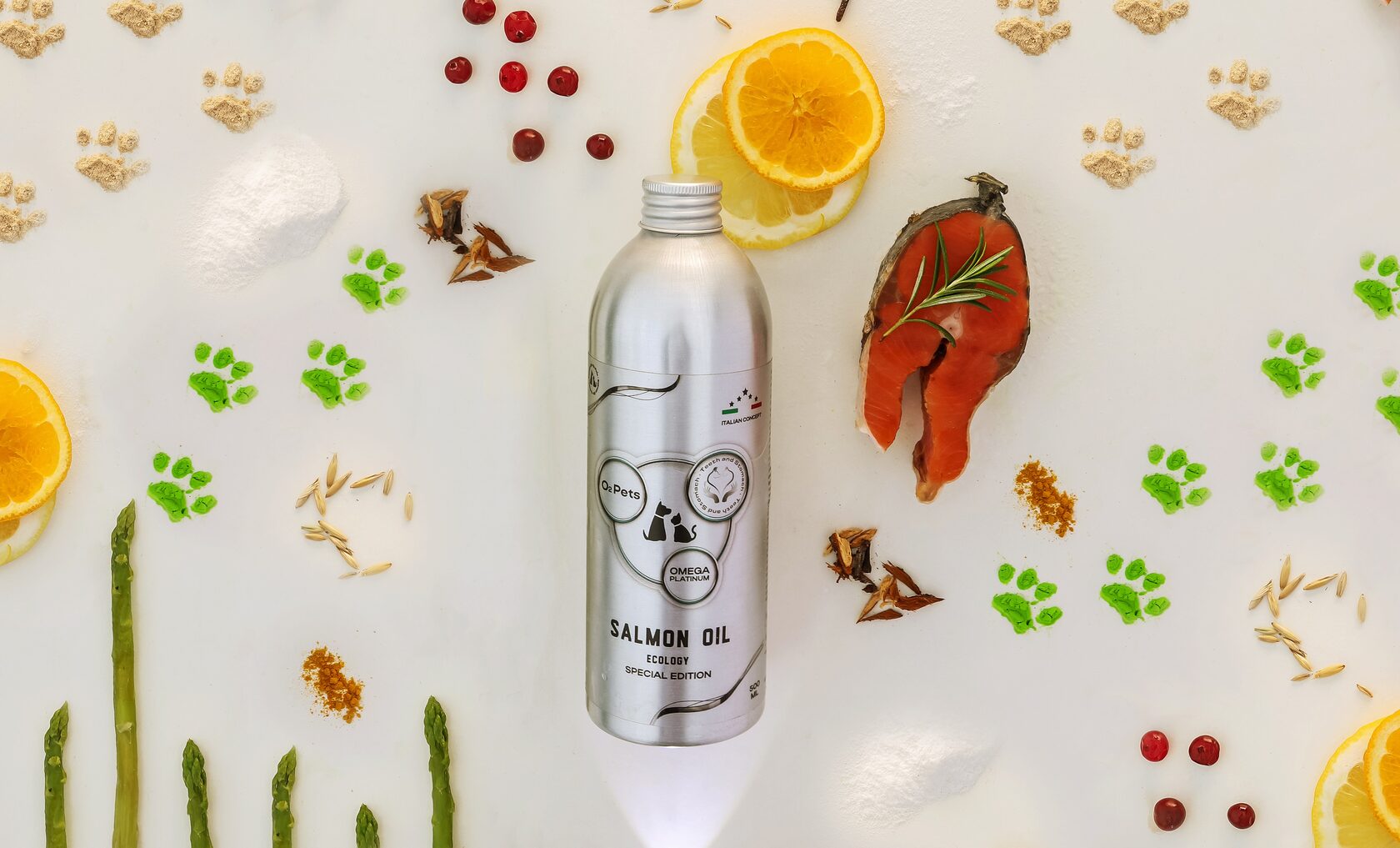
What are the Advantages of Wild Norwegian Salmon?
Wild salmon grows in its natural environment of the Atlantic Ocean and Norwegian fjords. It feeds on natural food (crustaceans, krill, small fish) and is constantly moving.
1. Pure Natural Composition — No Artificial Colors
In the wild, salmon gets its pink-red flesh color naturally — from the crustaceans it eats.
Farmed salmon, on the other hand, has greyish flesh when fed artificial feed. To give it a "marketable" appearance, producers add synthetic dyes, most commonly canthaxanthin (E161g).
What this means for your pet: a natural, pure product without chemical additives.
Farmed salmon, on the other hand, has greyish flesh when fed artificial feed. To give it a "marketable" appearance, producers add synthetic dyes, most commonly canthaxanthin (E161g).
What this means for your pet: a natural, pure product without chemical additives.
2. No Antibiotics
With high stocking densities in net pens, diseases spread instantly. Farmers are forced to use antibiotics to prevent epidemics.
Antibiotics accumulate in fish tissues and can:
Wild salmon lives in a clean environment and does not need antibiotics.
Antibiotics accumulate in fish tissues and can:
- cause allergic reactions in sensitive animals;
- disrupt gut microflora;
- contribute to bacterial resistance to drugs.
Wild salmon lives in a clean environment and does not need antibiotics.
3. Significantly Lower Levels of Toxins — EFSA Data
This is perhaps the most important point for your pet's health. Data from the European Food Safety Authority (EFSA) has repeatedly confirmed that the highest levels of polychlorinated biphenyl (PCB) contamination are found precisely in fish and fish products.
Key findings from EFSA reports:
Key findings from EFSA reports:
What EFSA experts say:
"The mean level of the six indicator PCBs in fish was close to five times the sum of the 12 dioxin-like PCBs."
PCBs (polychlorinated biphenyls) are persistent organic pollutants that
- accumulate in fatty tissue and are slowly eliminated from the body;
- are associated with a wide range of negative health effects;
- are classified by the International Agency for Research on Cancer as probable human carcinogens.
It is important to note that farmed salmon receives feed that is itself among the most contaminated products. Studies show that PCB concentrations in farmed salmon can significantly exceed those in wild salmon.
4. Higher Quality Fatty Acid Profile
Wild salmon contains a more balanced ratio of omega-3 to omega-6 fatty acids. It is leaner — wild fish have thin fat layers.
Farmed salmon is less active and receives high-calorie feed, making it much fattier, and this fat may contain harmful impurities.
What this means for your pet: a cleaner source of beneficial fatty acids without excess calories and toxins.
Our pets are more vulnerable to toxins than humans due to their smaller body weight and different metabolism.
Farmed salmon is less active and receives high-calorie feed, making it much fattier, and this fat may contain harmful impurities.
What this means for your pet: a cleaner source of beneficial fatty acids without excess calories and toxins.
Our pets are more vulnerable to toxins than humans due to their smaller body weight and different metabolism.
Farmed salmon can be a source of:
- antibiotics → dysbiosis, allergies;
- artificial dyes → liver stress;
- toxins (PCBs, dioxins) → long-term risk of cancer and immune disorders;
- excess fat with lower nutritional value → excess weight without benefit.
Based on data from international organizations (FAO/WHO, EFSA), a clear conclusion can be drawn: wild salmon is significantly superior to farmed salmon in terms of purity and safety
Wild Norwegian salmon:
- contains fewer toxins and PCBs, which accumulate in aquaculture feed;
- requires no antibiotics or synthetic dyes;
- provides your pet with a clean source of omega-3 for coat, joint, and immune health.
For your pet, this means:
- a healthy, shiny coat;
- strong joints;
- a robust immune system;
- and most importantly — safety.

